



Natural vs Synthetic Sclareolide Powder: Which Fits Your Fragrance Line?
Whether you're researching ingredients for a fragrance line, you've probably met sclareolide powder and pondered whether the natural or synthetic option would better fit your formulation aims. Sclareolide is a sesquiterpene lactone associated with Clary Sage-derived materials and is an important precursor of Ambroxide, a clean and ethical alternative to whale ambergris. The choice of natural vs. synthetic impacts your product's smell profile, sustainability message, and manufacturing costs. Now let me guide you through what matters most while making that call.
Understanding Sclareolide Powder: Composition and Properties
Chemical Identity and Botanical Origin
The chemical formula of Sclareolide powder is C 16 H 26 O 2, and it has a consistent melting point between 124°C and 126°C; therefore, it is particularly relevant for high-temperature processing conditions. The chemical may be obtained by two methods: direct extraction and biotransformation from Clary Sage. Its optical rotation between -10° and -14° can be an important quality parameter, particularly when the material is used for downstream Ambroxide preparation where stereochemical characteristics may affect conversion and product profile.
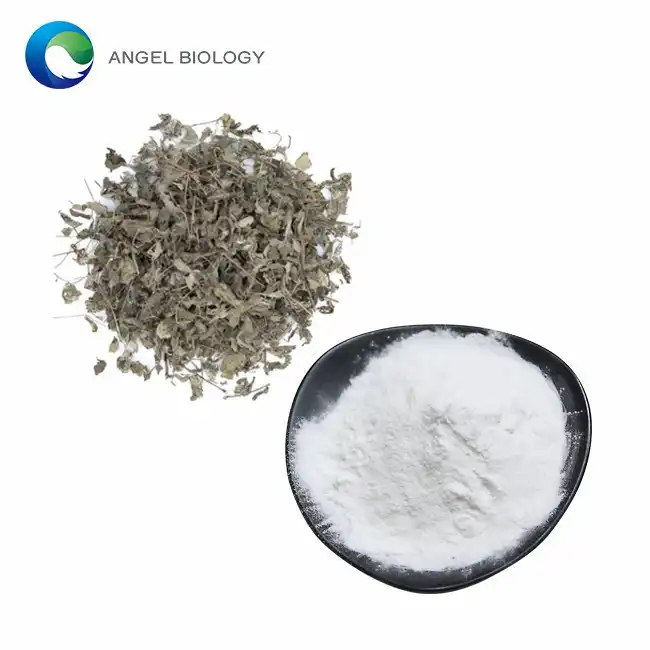
The material is an off-white to white crystalline powder with a subtle woody, cypress-like odour. It is lipophilic and readily soluble in ethanol, diethyl phthalate, and propylene glycol but not in water. This solubility profile suggests the need for oil phase integration or emulsification in the end product.
Olfactory Profile and Multifunctional Applications
Sclareolide has a musky and warm olfactory character associated with ambergris-type fragrance profiles; thus, it is a useful component of high-end fragrances, body care products, and cosmetic formulations where its odor profile is desired. It is also employed in flavoring applications and in selected cosmetic formulations, where the appropriate use level depends on the product type, regulatory requirements, and supplier specifications. It is currently one of the versatile plant-derived intermediates of interest to fragrance manufacturers because of its applicability in fragrance production and functional cosmetic formulations.

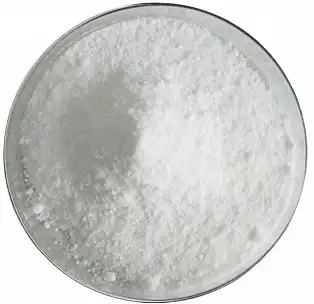
Natural vs Synthetic Sclareolide Powder: Key Differences and Performance
The underlying molecular framework of both natural and synthetic versions of sclareolide powder is identical, although their source, production route, impurity profile, and supply characteristics can differ – factors that are highly relevant to procurement teams and formulators alike.
Here is a point-by-point comparison across the parameters that commonly determine sourcing decisions:
Purity and consistency of sclareolide powder are important for commercial applications. Synthetic sclareolide may be supplied at high purity with consistent batch specifications, depending on the manufacturing process and grade. This can make it a practical option for commercial Ambroxide production when stability of yield is critical. Natural-grade material created from Clary Sage sclareol through biotransformation may also meet high-purity specifications, while its minor compositional differences depend on the raw material and production process.
Fragrance profile: Natural-derived materials may present subtle differences in odor character depending on the source and processing route. That variation may support a distinctive and artisanal scent story for certain fragrance concepts. Synthetic sclareolide can provide a clean, consistent ambergris-like base that may be easier to standardize in large-scale compounding.
Sustainability credentials: Natural-derived sclareolide, particularly a biotransformation-derived substance, can support a natural-origin or renewable-feedstock positioning when the production route and documentation meet the requirements of the relevant certification or labeling framework. If firms want to appeal to eco-conscious consumers or pursue COSMOS/NATRUE-related positioning, the complete supply-chain documentation remains important.
Cost and availability: Synthetic sclareolide is often more readily available and can offer predictable sourcing economics. Agricultural factors can affect the availability and pricing of Clary Sage-derived feedstocks, which may lead to fluctuations that are important for bulk purchasing.
These differences are seldom black and white; the correct decision relies on your formulation environment, brand positioning, and volume needs.
How to Choose the Right Sclareolide Powder for Your Fragrance Line?
Matching Ingredient Origin to Brand Positioning
If your scent line is about botanical authenticity, documented natural origin, or markets with more specific 'natural' labeling requirements, then sclareolide powder that is natural-based or biotransformation-based may be a preferable alternative. It can support a botanical sourcing story while maintaining a defined ingredient specification.
If you need to produce high-volume Ambroxide, manage costs, or ensure tight batch repeatability in large-scale manufacturing, high-purity synthetic sclareolide can provide the consistency your production process requires.
Key Selection Criteria for Procurement Teams
Before choosing a supplier, procurement teams should consider the following:
Purity Certification: Ask for GC test evidence showing the product meets the required purity specification. If you are utilizing material for chiral Ambroxide synthesis, verify the optical rotation data and other relevant identity parameters.
Regulatory compliance: Make sure residual solvent levels and other quality parameters comply with the requirements applicable to your target market and intended use, particularly for cosmetic and flavor applications.
Sustainability documentation: Ask to see traceability papers that document the source of the raw materials and, where relevant, confirm that Clary Sage-derived feedstocks come from documented cultivation or responsible sourcing programs.
Certifications: If you're purchasing overseas, seek ISO, GMP, and other relevant quality and export compliance documents.
Once you've gone through these requirements, you're ready to narrow down providers and request true production-batch quality samples of sclareolide powder.
Best Practices for Using and Storing Sclareolide Powder in Fragrance Production
Formulation and Dosage Guidance
Sclareolide powder should be evaluated for incorporation into the oil part of an emulsion system since it has lipophilic characteristics. Before it is added to a flavor product, it is usually dissolved in a suitable carrier such as ethanol or DEP before incorporation, where permitted for the intended application. Precise dosage control matters—minor changes in concentration can shift the olfactory balance, potentially affecting brighter top notes.
Storage and Shelf Life Protocols
Keeping your raw materials in the right way protects their quality. Under appropriate supplier-recommended storage conditions, sclareolide powder can maintain its specified quality throughout its stated shelf life. Keep it in well-closed containers, away from excessive light and moisture, and follow the supplier's recommended temperature range. Surface caking can happen when moisture exposure is high, but caking alone does not necessarily indicate a change in chemical identity. To help with tracking in GMP-compliant settings, write lot numbers and receipt dates on all containers.
Common formulation challenges—such as incomplete dissolution or minor discoloration—can often be investigated by optimizing the carrier solvent, mixing conditions, and processing temperature. Maintaining consistent quality across batches is more straightforward when these parameters are controlled and verified.
Finding Trusted Suppliers and Making Bulk Purchases
What Certifications Should You Require?
As a minimum, sclareolide powder suppliers you can trust should have an established quality management system and provide relevant documentation such as MSDS/SDS and COA upon request. They should also follow appropriate manufacturing and quality-control practices for the intended application. For distribution in the US market, applicable facility, ingredient, and product requirements should be reviewed according to the final use. Suppliers who offer third-party analysis proof along with self-reported data can provide additional transparency.
When evaluating pricing, recognize that the lowest cost-per-kilogram may not always provide the best overall value if purity, batch consistency, documentation, or supply reliability are compromised. Paying a modest premium for material that meets the required analytical specification can help reduce the risk of reformulation or production issues in high-end fragrance applications.
Conclusion
In the process of making fragrances, natural and manufactured sclareolide powder are used for different sourcing and formulation objectives. Natural-grade materials, especially biotransformation-derived products, can support natural-origin positioning and may offer subtle differences in scent character that are valued in certain perfumery concepts. Synthetic variants offer greater control over purity, batch consistency, and supply planning that can be useful for large-scale industrial synthesis. Your choice should be anchored in brand values, formulation requirements, and procurement realities—not a blanket preference for one origin over another. Understanding these trade-offs positions your R&D and procurement teams to source with confidence.

FAQ
1. What is the difference between natural and nature-identical sclareolide?
Natural sclareolide may be obtained from Clary Sage-derived sclareol through suitable processing or biological transformation, depending on the specific production route and applicable regulatory framework. Nature-identical sclareolide is produced through a synthetic process to obtain the same molecular structure, but its source and production route differ from botanical materials. This difference can be important for natural-origin positioning and labeling compliance.
2. Can sclareolide powder be used in water-based fragrance formulations?
The sclareolide powder compound is hydrophobic, which means it doesn't mix with water without additional formulation work. The most useful approaches for incorporating it into water-based systems while maintaining suitable dispersion include emulsification or complexation technologies such as cyclodextrins, depending on the finished formulation.
3. How should I verify purity when sourcing sclareolide powder?
Ask for a GC test report that confirms the sample meets the required purity specification and review relevant identity parameters, including optical rotation where appropriate. Together with supporting analytical data, these tests can help verify chemical identity, purity, and suitability for downstream synthesis.
4. What is the standard shelf life under proper storage conditions?
Sclareolide powder should be stored according to the supplier's specified conditions and used within the stated shelf life. Well-closed packaging and protection from excessive light and moisture can help maintain the material's specified quality during storage.
Partner with Angelbio for Premium Sclareolide Powder
Angelbio offers high-purity sclareolide powder with defined GC specifications and quality documentation to support fragrance and downstream Ambroxide applications. The company has conducted independent research and development for more than 18 years in partnership with Xi'an Jiaotong University's Institute of Life and Health Research. Our technical team is ready to help you reach your formulation goals, whether you need a reliable sclareolide powder manufacturer for Ambroxide synthesis or a trusted sclareolide powder supplier for cosmetic and fragrance applications. Request your sample or bulk quote today at angel@angelbiology.com.

References
1. Bhatia, S. P., et al. "Safety Assessment of Labdanum-Derived Ingredients." International Journal of Toxicology, 2008.
2. Kraft, P., & Bajgrowicz, J. A. "Ambergris—A Chemistry–Sensory Journey." Helvetica Chimica Acta, 2003.
3. Wajs-Bonikowska, A., et al. "Chemical Composition of Salvia sclarea Essential Oil and Its Biological Activities." Natural Product Communications, 2015.
4. Surburg, H., & Panten, J. Common Fragrance and Flavor Materials: Preparation, Properties and Uses. Wiley-VCH, 2006.
5. Leffingwell, J. C. "Olfaction." Leffingwell Reports, 2002.
6. Sell, C. S. The Chemistry of Fragrances: From Perfumer to Consumer. Royal Society of Chemistry, 2006.