



7 Supplier Checks to Run Before Signing an Ambroxide Supply Agreement
Before signing an ambroxide supply agreement, I recommend running seven checks on every ambroxide supplier. Verify the company's identity and manufacturing role. Confirm the material's identity, grade, purity, and odor profile. Review batch-specific COA and SDS documents. Evaluate batch-to-batch consistency, compare total landed cost, and confirm production capacity and shipping performance. Finally, assess communication, technical support, and contract terms. Together, these checks help protect your formulation, production schedule, and procurement budget. A low quotation offers little value if the odor profile varies between batches or incomplete documentation delays customs clearance. This guide explains each check in practical terms, helping your team compare suppliers and quotations more consistently.
What Buyers Should Know About Ambroxide Before Comparing Suppliers
Before requesting quotations, buyers should understand the material's identity, typical specifications, and intended applications. This makes it easier to evaluate whether different suppliers are offering comparable products.
What Ambroxide Is and Where It Comes From
Ambroxide, also known by related trade and chemical names such as Ambroxan, is an aroma compound widely used in perfumery. It is commonly associated with warm amber, woody, and musky odor characteristics. It is valued as a fragrance ingredient partly because it can provide a long-lasting scent impression in suitable formulations. Its use is also associated with the development of modern amber-style fragrance profiles.


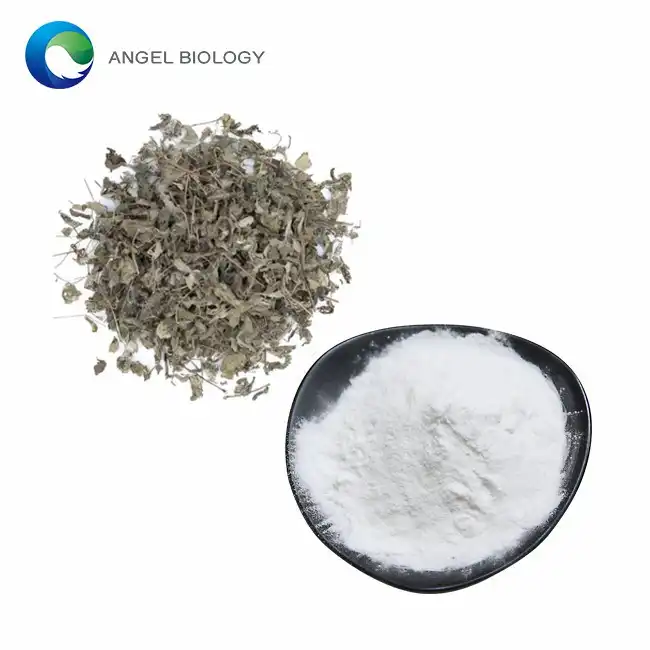
Commercial Ambroxide can be produced through different synthetic routes. Some manufacturing routes use sclareol, a naturally occurring diterpene alcohol found in clary sage (Salvia sclarea), as a starting material. The subsequent conversion involves chemical processing. Other routes may use different starting materials or production methods. These differences can influence manufacturing cost, impurity profiles, traceability, and the information available about raw material sourcing.
For this reason, buyers should not assume that all Ambroxide products have the same production origin. When a supplier does not specify the manufacturing route or source information, ask for clarification. A clear explanation helps buyers understand the product's background and assess whether its documentation meets their procurement and market requirements.
Typical Specifications to Expect
Ambroxide is commonly supplied as a white to off-white crystalline powder, although its exact appearance may vary by grade and production process. Some commercial specifications list a melting point around 74–77°C and a GC assay of 99% or higher. These figures should be treated as product-specific reference values rather than universal acceptance standards. Buyers should confirm the actual specification and test method for each offered grade.
Ambroxide has limited water solubility and is generally more compatible with selected organic solvents and fragrance carriers. Its solubility and dispersion behavior should be checked in the intended formulation rather than assumed from a general product description. Compatibility may vary depending on the solvent system, concentration, temperature, and other formulation ingredients.
Odor profile, appearance, assay, impurity limits, moisture content, and packaging conditions are also relevant purchasing parameters. Shelf life should be based on the supplier's stability information and recommended storage conditions. Do not assume that every product has a fixed 24-month shelf life or identical moisture behavior. Request a current specification sheet and batch-specific COA, and ask the supplier to explain any missing or unclear test items.
Where Ambroxide Is Used
Ambroxide is primarily used in fine fragrances and other fragrance applications where an amber-like, woody, and persistent scent character is desired. It may also be incorporated into selected personal-care products, soaps, detergents, and fabric-care formulations, depending on the formulation design and applicable market requirements.
Its performance depends on the fragrance composition, dosage, carrier, processing conditions, and finished-product format. A fragrance house may focus on odor quality, diffusion, and compatibility with other aroma materials. A manufacturer of soaps or fabric-care products may place greater emphasis on formulation stability, processing behavior, and scent retention after use.
Before requesting a sample, tell the supplier about your intended application, target odor profile, formulation type, and required grade. This helps the supplier recommend a suitable specification and allows your technical team to evaluate the material under relevant formulation conditions.
Checks 1–3: Confirm the Company, the Material, and the Paperwork
The first three checks answer three essential questions: Who is supplying the material? What exactly are you purchasing? What documentation supports the product's identity and quality?
Check 1: Verify Identity, Manufacturing Role, and Experience
Before selecting an ambroxide supplier, determine whether the company manufactures the ingredient directly, sources it from partner factories, distributes it, or operates as a trading company. Each business model can be suitable, but the level of control over production processes, quality checks, and supply arrangements may differ.
Request the company's registered legal name, registration details, business address, and a designated contact for quality-related questions. If production is outsourced, ask which facility manufactures the material and how the supplier manages quality and traceability between the manufacturer and the customer. You should also review its experience serving fragrance manufacturers, cosmetics brands, and OEM clients.
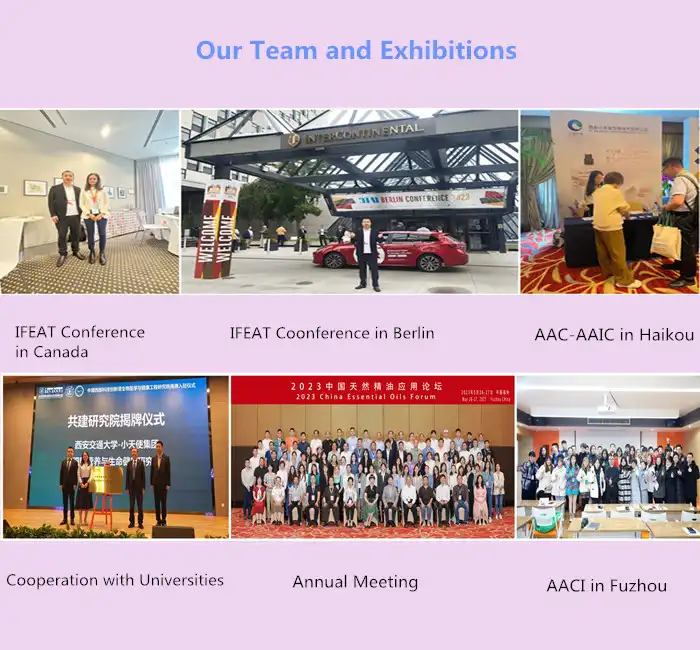
Ask how the company handles customer complaints, investigates quality deviations, and communicates corrective actions. These procedures can provide useful insight into its operational reliability. Angelbio reports investment support from Angel Holding Group and the Institute of Life and Health Research at Xi'an Jiaotong University, along with more than 18 years of independent research and testing experience. Buyers should evaluate these company background details alongside current product documentation, sample performance, and supply records.
For long-term or high-volume contracts, suppliers should be able to explain their production arrangements, quality-control procedures, and delivery capabilities. Many suppliers also accept trial orders, allowing buyers to assess product quality, documentation, and service before making larger commitments.
Check 2: Confirm Identity, Grade, Purity, and Odor
The next step is to verify that the offered material is Ambroxide with the correct chemical identity, including the applicable CAS number, 6790-58-5. The product name, CAS number, grade, and specification should remain consistent across quotations, technical documents, invoices, labels, and SDS files. Discrepancies can create avoidable delays during internal approval, shipping, or customs review.
Purity is an important parameter, but it should not be the only acceptance criterion. A GC assay of 99% or higher may be listed in a supplier's specification, yet two samples with similar assay results can still differ in odor profile because of differences in trace impurities or production processes. Buyers should therefore evaluate both analytical results and sensory characteristics.
Request representative samples and assess their appearance, odor, handling properties, and compatibility with your own fragrance base. Check how the material disperses or dissolves in the selected carrier and whether it affects the overall scent balance. Avoid assuming that one sample's performance will automatically represent every future batch.
It is also important to understand source descriptions such as "synthetic," "nature-identical," and "sclareol-derived." These terms describe different aspects of the material's origin or production route and should be supported by accurate supplier information. They may also affect product positioning, labeling, and market-specific documentation requirements. Retain approved reference samples from qualified batches so that future deliveries can be compared against an agreed standard.
Check 3: Review COA, SDS, and Regulatory Documents
A reliable Ambroxide supplier should provide a current specification sheet, batch-specific Certificate of Analysis (COA), Safety Data Sheet (SDS), storage recommendations, shelf-life information, and country-of-origin details where applicable. The COA should identify the tested batch, relevant test items, analytical methods, results, and applicable acceptance limits. Buyers should check whether the reported values meet the agreed product specification.
The SDS should provide appropriate information about chemical identification, hazards, handling, storage, exposure controls, and emergency measures. In the United States, the Occupational Safety and Health Administration's Hazard Communication Standard specifies a 16-section SDS format. Buyers should confirm that the chemical identity and CAS number are consistent with the product being purchased.
Importers should also check applicable chemical inventory and import requirements in the destination market. For shipments to the United States, determine whether the substance is subject to relevant Toxic Substances Control Act (TSCA) requirements and confirm the necessary documentation with the supplier and customs representative. Requirements may differ by market and intended use, so a supplier's general statement of compliance should not replace an import review.
Depending on the customer's application and market, additional information may be needed about residual solvents, heavy metals, allergens, animal-derived materials, or other restricted substances. Do not request unrelated tests as universal requirements; instead, identify the parameters relevant to the finished product and destination market. For residual solvents, ICH Q3C may be a useful reference in applicable pharmaceutical contexts, but it should not automatically be treated as the governing standard for every fragrance ingredient. Collect and review the required documents before approving samples or placing the first commercial order.
Checks 4–6: Test Consistency, Cost, and Supply Performance
The next three checks help determine whether the supplier can deliver the agreed material consistently, at the required volume, and within the expected total procurement cost.
Check 4: Test Batch-to-Batch Consistency
A single satisfactory sample does not establish long-term consistency. Buyers should evaluate multiple production batches, comparing their appearance, odor profile, assay, impurity results, moisture content where relevant, and packaging condition. The exact test items should reflect the agreed specification and intended application.
Where possible, request samples from different production batches and evaluate them using the same procedures. Compare the results with the approved reference sample and your own formulation requirements. If assay, melting point, odor, or impurity results differ, ask the supplier to explain whether the variation is within the agreed limits and whether it affects product performance.
Review the supplier's quality-control arrangements as well. Useful indicators may include an established quality-management system, documented testing procedures, calibrated analytical equipment, appropriate laboratory capabilities, and defined batch-release responsibilities. If independent testing is important to your project, agree on the laboratory, sampling procedure, and test methods before ordering.
You should also agree on how quality claims will be handled. The contract or quality agreement should explain notification periods, retained samples, retesting procedures, responsibility for testing costs, replacement arrangements, and credit or refund conditions. Clear procedures reduce uncertainty if a delivered batch does not meet the agreed specification.
Check 5: Compare MOQ, Pricing, Packaging, and Landed Cost
A low unit price can conceal additional procurement costs. Compare quotations using the same grade, assay requirement, packaging format, quantity, Incoterms, destination, payment terms, lead time, and documentation requirements. Include freight, insurance, customs duties, taxes, inspection fees, and any other applicable charges when calculating total landed cost.
The International Chamber of Commerce's Incoterms 2020 rules clarify the responsibilities of buyers and sellers for delivery, costs, and risk transfer. Terms such as FOB and CIF should be evaluated according to the named port and the responsibilities specified in the contract. Do not compare quotations based only on the Incoterms abbreviation; confirm the full delivery arrangement.
Minimum order quantity (MOQ) may vary according to the supplier's production schedule, packaging format, and order volume. Ask whether trial quantities, regular commercial batches, and larger contract volumes are available. Packaging should protect the material during storage and transportation. Confirm the container material, liner, sealing method, net weight, labeling, and suitability for your handling and dosing process.
For crystalline powder, suitable sealed packaging and controlled storage conditions can help reduce exposure to moisture and contamination. However, the packaging choice should be based on the supplier's product data and your logistics requirements rather than a general assumption that one container type is always best. Finally, consider the cost of rejected batches, production delays, additional testing, and reformulation. These risks may outweigh a small reduction in the quoted unit price.
Check 6: Confirm Capacity, Lead Time, and Shipping Performance
When evaluating an ambroxide supplier, ask about monthly production capacity, upstream raw material availability, and how the company manages changes in demand. If the supplier relies on external manufacturers or raw material partners, clarify how those relationships may affect lead times and supply continuity.
Request separate lead-time estimates for sampling, testing, production, packaging, document review, and shipment scheduling. A single overall lead-time figure can conceal delays at individual stages. Confirm whether the quoted lead time begins after payment, sample approval, specification confirmation, or another agreed milestone.
For shipments to the United States or other destination markets, confirm the supplier can provide the required commercial invoice, packing list, transport documents, and applicable origin or customs information. The exact documents depend on the shipping route, trade terms, and local import rules. Buyers should confirm requirements with their customs broker before shipment.
Supply continuity should also be discussed. Consider whether the supplier has alternative raw material arrangements, appropriate inventory planning, and a clear process for communicating production or manufacturing-site changes. If you qualify a backup source, verify its material identity, specifications, odor profile, and formulation performance before treating it as an approved alternative.
Providing annual demand estimates or a rolling forecast may help suppliers plan production and raw material purchasing. For critical fragrance ingredients, buyers can also agree on reorder points and safety-stock arrangements based on actual consumption, lead time, and business risk.
Check 7 and Final Supplier Evaluation
The final check brings together communication, technical support, and written commitments. A supplier should be evaluated not only on its quotation but also on how clearly it manages the relationship after an order is placed.
Check 7: Evaluate Communication, Technical Support, and Contract Terms
Communication before the first order can indicate how efficiently future issues may be handled. Assess response time, technical accuracy, quotation clarity, and consistency between the sales, quality, production, and logistics teams. A capable supplier should be able to explain product specifications, storage conditions, analytical results, packaging options, and batch-comparison procedures.
Once the supplier has passed the technical and commercial review, prepare a written supply agreement. It should identify the product name, CAS number, grade, agreed specifications, packaging, COA requirements, delivery terms, acceptance criteria, and procedures for managing product or process changes. It should also address confidentiality, liability, force majeure, quality claims, replacement or credit arrangements, and contract termination.
For private-label or customized orders, include artwork approval, labeling requirements, batch identification, traceability, packaging specifications, and ownership of customer-specific materials where relevant. Any additional charges for custom packaging or services should be stated clearly.
Verbal assurances are difficult to verify later. Record important commitments in the quotation, technical agreement, purchase order, or supply contract so that both parties have a clear reference throughout the cooperation.
Score Suppliers with a Weighted Matrix
A weighted scoring matrix makes supplier comparisons more consistent. List the factors that matter to your business, such as product quality, documentation, batch consistency, production capacity, landed cost, delivery performance, and customer service. Assign each factor a weight based on its importance to your project.
A fine-fragrance manufacturer may place greater emphasis on odor profile, batch consistency, and compatibility with its fragrance base. A distributor may prioritize landed cost, documentation, shelf life, and MOQ flexibility. OEM customers may give more weight to confidentiality, labeling, customized packaging, and order coordination.
Send the same technical requirements and quotation request to each shortlisted Ambroxide supplier. Evaluate samples under comparable conditions and use the same scoring criteria for every candidate. Do not move to regular purchasing until the selected sample and documentation meet your agreed requirements. Technical, quality, and procurement teams should review the results together and retain a shared supplier evaluation record.
Common Mistakes to Avoid
Several avoidable mistakes can increase procurement risk. Some buyers compare only the unit price without considering freight, testing, customs charges, or the cost of a rejected batch. Others accept incomplete COAs, overlook inconsistencies in product identity, or fail to verify the company's actual manufacturing and supply role.
Another common mistake is approving a supplier based on one laboratory sample without testing the material in the intended formulation. A satisfactory assay result alone does not confirm that the odor profile and formulation behavior will meet production requirements. Buyers may also sign contracts without clear acceptance criteria, change-control procedures, or quality-claim arrangements.
Finally, slow or unclear communication during supplier qualification should not be ignored. If a supplier cannot provide consistent answers about specifications, documentation, or delivery arrangements before the first order, it may be difficult to resolve problems later. Address these issues before issuing a purchase order.
Final Supplier Approval Checklist
Before signing, make sure the procurement, quality, technical, and logistics teams agree on the key requirements. Confirm the supplier's legal identity and manufacturing role. Check that the product name, CAS number, grade, appearance, odor profile, and specifications are consistent across the documents and samples.
Verify that the evaluation includes representative batches, batch-specific COAs, current SDS files, and the required regulatory or shipping documents. Confirm the MOQ, packaging format, price, landed cost, lead time, and delivery terms. Make sure the agreement explains acceptance criteria, quality claims, product changes, replacement arrangements, and supply-continuity expectations.
Record the results so they can be used for internal approval and future supplier reviews. If a requirement remains unclear or a document is missing, resolve the issue before signing the agreement or releasing a commercial order.
Conclusion: Select the Supplier That Reduces Long-Term Procurement Risk
When selecting an Ambroxide supplier, buyers should consider total procurement value rather than focusing only on the initial quotation. The seven checks cover company identity, material specifications, documentation, batch consistency, landed cost, supply performance, communication, and contract terms.
Figures such as 99% GC assay, a melting point around 74–77°C, and a 24-month shelf life should be treated as specification-dependent reference values, not guaranteed characteristics of every Ambroxide product. Buyers should request current product documentation, review batch-specific results, and evaluate samples in their own formulation before approving a supplier.
A repeatable process using a weighted scoring matrix, controlled sample evaluation, and written supplier approval criteria can help reduce avoidable quality, delivery, and cost risks. If you are comparing suppliers for a new fragrance project, define your required grade, odor profile, application, and order volume before requesting quotations.
FAQ: Buying Ambroxide from a Global Supplier
1. What should I ask before placing a bulk order?
Request the current specification sheet, batch-specific COA, SDS, shelf-life information, MOQ, packaging details, lead time, and applicable Incoterms. Confirm how quality claims are handled and whether the supplier can provide samples for evaluation. Before placing a bulk order, test the sample in your own fragrance base and confirm that the documentation meets your requirements.
2. How do I compare suppliers by purity and price?
Compare suppliers using the same chemical identity, grade, assay requirement, packaging quantity, and delivery terms. A GC assay of 99% or higher may be available from some suppliers, but it should not be the only selection criterion. Also compare odor profile, impurity data, batch consistency, documentation, and total landed cost. The most suitable offer is the one that meets your technical and commercial requirements consistently.
3. Is fragrance-grade Ambroxide the same as pharmaceutical grade?
Not necessarily. Grade descriptions depend on the intended application and the supplier's product specification. A fragrance-grade material should not automatically be considered suitable for pharmaceutical or other regulated applications. Buyers should define the intended use and request documentation that supports the required grade and applicable market requirements.
4. Can I order a low MOQ or custom packaging?
MOQ and customization options depend on the supplier's production arrangements, available packaging, and order requirements. Ask whether trial orders, small-volume purchases, private labeling, or customized packaging are available. Confirm any additional costs, minimum quantities, and lead-time changes in writing before placing the order.
Request Ambroxide Supplier Information and a Sample from Angelbio
Angelbio reports more than 18 years of independent research and testing experience, with investment support from Angel Holding Group and the Institute of Life and Health Research at Xi'an Jiaotong University. If you are looking for an Ambroxide supplier for a new fragrance or personal-care project, contact angel@angelbiology.com.
To help our team evaluate your requirements, include your target application, required grade or assay, preferred odor profile, estimated order quantity, destination market, and any specific documentation or packaging needs. Our team can discuss product specifications, sample options, and quotation details based on your project requirements.
References
1. Incoterms 2020 Rules, International Chamber of Commerce, 2019.
2. Hazard Communication Standard (29 CFR 1910.1200), Occupational Safety and Health Administration, 2012.
3. ICH Q3C(R8) Guideline for Residual Solvents, International Council for Harmonisation, 2021.
4. Common Fragrance and Flavor Materials, Surburg and Panten, Wiley-VCH, 2016.
5. Synthesis of Ambrox from (−)-Sclareol and (+)-cis-Abienol, Barrero et al., Tetrahedron, 1993.
6. ISO 9001:2015 Quality Management Systems – Requirements, International Organization for Standardization, 2015.